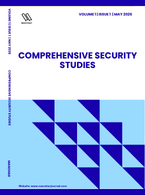
Comprehensive Security Studies (CSS) journal encourages innovative, critical and multidisciplinary perspectives that contribute to evolving discourse on comprehensive security. It is an international academic journal with a global coverage focusing on defence, military conflict, security issues of a state and its citizens, discussing threats to, including political, socio-cultural, environmental, human rights, food, livelihood, and gender issues. It covers new dimensions of security challenges emerging from diaspora connections, international migrations, border fluidity, multiple citizenship regimes and other transnational processes that have emerged due to globalisation.
Scope of the Journal: Comprehensive Security Studies (CSS)
The Comprehensive Security Studies journal has global coverage and multidisciplinary approach to the study of security, beyond traditional state- centric and military frameworks. It covers both external and internal dimensions of security, including political, socio-cultural, environmental, human rights, food, livelihood, and gender-related concerns. The journal particularly focuses on emerging security challenges shaped by globalization, transnationalism, migration, diaspora linkages, and the role of non-state actors. It welcomes theoretical, empirical, and policy-oriented research that critically engages with contemporary security discourses, issues of legitimacy, and the evolving nature of conflict and peace at global, national, and community levels.
Ethical and Legal Conditions
For publication of a manuscript through peer-reviewed process like in this journal, each stake holder is expected to adhere to the standard of ethical behaviour which is prescribed internationally for all parties involved in the act of publishing- publisher, authors, editors, and reviewers. The journal is committed to adhere to these internationally practised ethical standards.
The Comprehensive Security Studies accepts manuscript submissions exclusively through the Kryoni Journal Management System (Kryoni JMS), a secure and comprehensive online platform designed to manage the complete editorial and publishing workflow—from initial manuscript submission through final publication.
Kryoni JMS offers authors a streamlined and transparent submission experience, enabling them to:
Submit new manuscripts online
Track the status of submissions in real time
Receive editorial decisions and reviewer comments
Upload revised manuscripts and supporting documents
Authors submitting to the journal for the first time are required to create an account in the online submission system.
Registration Options
Option 1: Quick Login with Email and OTP
Authors can register by entering their email address and verifying it using a One-Time Password (OTP). Once verified, they can complete a brief registration form to activate their account.
Option 2: Sign Up with Password
Authors may also create a standard account by selecting Sign Up, setting a password, and logging in using their chosen credentials.
Once registration is complete, authors can submit manuscripts, monitor review progress, and respond to editorial requests directly through the system.
Before You Submit
Prior to submission, authors are strongly encouraged to review the journal’s Instructions for Authors to ensure compliance with all submission requirements, including:
Manuscript formatting guidelines
Reference style requirements
Publication ethics and editorial policies
Authorship criteria
Figure and table specifications
Required supporting documentation
Manuscript Submission Process
The online submission process consists of the following steps:
Enter manuscript details, including title, abstract, keywords, author names, and affiliations.
Upload the main manuscript file and any supplementary materials.
Upload the Conflict-of-Interest disclosure form.
Select the applicable Article Processing Charge (APC) option.
Review all submission information for accuracy.
Confirm and complete the submission.
Upon successful submission, the corresponding author will receive an automated acknowledgment email confirming receipt of the manuscript.
Monitoring Submission Status
Authors may log in to Kryoni JMS at any time to:
Track the current status of their manuscript
View editorial decisions
Access reviewer comments
Upload revised files
Download invoices and payment receipts, where applicable
Revised Submissions
If revisions are requested, the corresponding author will receive an email notification.
To submit the revised files, the corresponding author must log in to the Kryoni JMS portal and access the manuscript record. Revised manuscripts, response-to-reviewer comments, and any updated supporting files can be uploaded through the same submission portal.
APC Payment and Notifications
If an Article Processing Charge (APC) is applicable upon acceptance of the manuscript, the corresponding author will receive an email notification with payment instructions.
To complete the payment, the corresponding author can log in to the Kryoni JMS portal, access the manuscript record, and make the APC payment securely through the system.
Payment status, invoices, and official receipts will be available within the portal for future reference and download.
Editorial Communication
All manuscript-related communication will be available within the Kryoni JMS portal, including:
Submission acknowledgments
Reviewer comments
Revision requests
Acceptance or rejection decisions
APC payment notifications
Proofing and publication updates
Kryoni JMS ensures a transparent and efficient workflow for authors, reviewers, editors, and publishers from submission through publication.
Technical Support
For assistance with account registration, manuscript submission, file uploads, or login issues, authors may contact the editorial office or technical support team using the contact information provided on the journal website.
Double-Blind Peer Review
Comprehensive Security Studies follows a double-anonymous peer-review system to ensure impartiality during the evaluation process. To maintain reviewer anonymity, authors must avoid including their names or any identifying details within the manuscript itself. Such information should appear only on a separate title page containing the article title, author details, contact information, and a brief biographical note.
After submission, the Editor-in-Chief conducts an initial in-house assessment to determine whether the manuscript aligns with the journal’s scope and editorial policies. Manuscripts not meeting these requirements could be desk rejected or returned for resubmission with correct format. Manuscripts meeting these requirements are then taken up by the editorial board members and sent to reviewers. Minimum of two reviewers evaluate the work on the basis of scholarly quality, originality, and structural coherence. The peer-review process generally takes a minimum of eight weeks.
Based on the reviewers’ recommendations, authors is intimated about either acceptance/minor or major revisions/ rejection. In cases requiring substantial revisions, the revised manuscript must be resubmitted and is usually returned to the reviewers for further evaluation. Some manuscripts may also be rejected at this stage. Following the completion of the review process, the Editorial Board makes the final publication decision.
Contact Address
For any queries, please contact Comprehensive Security Studies editorial office: css.editorials@gmail.com
File Format
Authors are advised to prepare their manuscripts using either Apple Macintosh or PC-compatible
formats and to use Unicode-compatible fonts. Preferred word-processing software includes Word
and Mellel. Manuscripts should be submitted in either RTF or Word file formats.
Submission Requirements
Types and Length of Manuscripts
The journal carries :
Original research articles (6,000–8,000 words)
Review articles (6,000–8,000 words)
Book reviews (1,000–2,000 words)
Comprehensive Security Studies does not accept manuscripts simultaneously under review elsewhere.
Language
The journal uses British English.
Structure of Manuscript
Authors are required to ensure that their manuscripts fully comply with the journal’s prescribed
style guidelines, as submissions that fail to meet these requirements will not be considered for
publication. The main text should be single-spaced, with a one-line gap between paragraphs.
Authors are also responsible for ensuring that their manuscripts are clearly written and academically coherent so that the editor and reviewers can easily understand the content. Therefore, it is recommended that papers be reviewed by professional language editors prior to submission. The journal follows a footnote system, although the use of footnotes should be limited to a
minimum.
Author’s Name
On the title page file, the author’s name should appear immediately below the title on the first page,
aligned to the left and presented in italics. This should be followed by the author’s designation and
institutional affiliation in roman typeface, along with the author’s email address.
Abstract and Keywords
Each article must include an abstract of approximately 150 words along with five keywords.
Headings
All titles, headings, and subheadings should be aligned to the left, written in headline style, and
should not be numbered.
First-level headings must be in bold.
India and the African Union’s Engagement Through IAFS: Challenges of Strengthening Partnership
The text. Second level headings are bold italic.
Indian Engagement Through IAFS The text.
In-Text Citations
Published Works with Authors
The author-date referencing style should be used. In-text citations should be indicated in the text
by giving the author’s name, with the year of publication in brackets, e.g. Gieg (2023) or (Gieg,
2023) or (Beri, 2024: 115; Dubey and Rajwar, 2025: 25), (Parekh et al, 2003: 58).
Interviews
For interviews in which the respondent’s identity is concealed, citations should appear in the format: (Interview, 25.10.2025). If the respondent’s identity is disclosed, the citation should include the respondent’s name, such as: (Sudha, Interview, 25.10.2025). In cases where endnotes are used, the citation should provide the respondent’s name (where disclosure is permitted), designation or
position, place of interview, and the date on which the interview was conducted..
Newspapers
(Indian Express, 11.10.2024)
Footnotes
The journal follows a footnote system rather than endnotes. References to archival materials should be presented in footnotes in a manner that is complete, concise, and clearly understandable. Authors may also include brief acknowledgements in the first numbered footnote.
References
All sources cited within the text must be fully listed in the reference section at the end of the
manuscript. The reference list should begin two line spaces below the conclusion of the article.
Authors are responsible for ensuring that all bibliographic details are accurate and complete.
References must follow the prescribed standard format:
Books
Beri, R. 2000. India Africa Building Synergies in Peace, Security and Development, New
Delhi: Pentagon Press LLP.
Edited Book
Dubey, A. and S. Rajwar, eds. 2025. Diaspora in Development: The Comparative Indian Experience.
Singapore: Palgrave Macmillan.
Chapters in Edited Book
Mishra, V. 2022. ‘Theorising the troubled black waters’, in Bhardwaj, A. and Misrahi-Barak,
J. eds. Kala Pani Crossings: Revisiting 19th Century Migrations from India’s Perspective. New
York: Routledge.
Articles
Laely, T. 2026. ‘Restitution of Cultural Heritage – an African or rather a European Affair? The Case of
the African Great Lakes Region’, the African Review, 53 (1-2): 1-26.
Dissertation
Odanga, R. 2024. ‘Anticipating Anticolonialism: A Reappraisal of African Nationalism in Kenya,
1890 – 1978’ Ph.D. Dissertation: Howard University.
Newspapers
A list of newspapers and magazines referred to, with their place of publication, should be as follows:
Business Standard. (09.02.2026). ‘Mauritius PM calls Modi ahead of India visit, pledges to deepen ties’, https://www.business-standard.com/world-news/mauritius-pm-ramgoolam-calls-pmmodi-126020901521_1.html accessed: 11.04.2026.
Official Publications
United Nations Educational, Scientific and Cultural Organization. 2005. Education for All Global Monitoring Report 2005: The Quality Imperative. Paris: UNESCO.
African Union. 2015. Agenda 2063: The Africa We Want. Addis Ababa: African Union.
Unpublished Sources
Devi, R. 2020. ‘Women and Cultural Identity in the Indian Diaspora’, (unpublished fieldwork).
Curepipe.
Interview with T.S. Trimurti, Former Permanent Representative of India to the United Nations,
The Hindu, 16.9.2025, Chennai, India.
Italics
Italics should be employed for the titles of publications, including books and journals, and also for
foreign-language terms that are not in common usage.
Per Cent
The term ‘per cent’ should be written out when the preceding number appears in words, for example,
‘five per cent’. The symbol ‘%’ should be used when the figure is expressed numerically, such as
‘5.1%’.
Quotations
All quotations should be enclosed within quotation marks unless they are presented as indented block quotations. Quotations exceeding three lines should be formatted as block quotes: indented, singlespaced, and without quotation marks. Single quotation marks are to be used only for quotations appearing within another quotation.
For example, as Vijay Mishra (2022: 20) stated: ‘… the Black Waters of the indenture imaginary cannot be disentangled from its colonial middlemen’.
Quotations may also be introduced in a sentence format, such as: As Mishra (2022: 20) explained: …
Long quotations consisting of three or more full lines should appear as separate block quotations, indented from the main text, without quotation marks, and separated by one blank line above and below the passage.
Figures
Tables, figures, and illustrations should be designed in a way that allows them to be understood
independently of the main text. If electronic submission of figures is not possible, authors should
provide them in a finalized format suitable for reproduction. For printing purposes, images and
illustrations must be of high quality, with a minimum resolution of 300 dpi.
For Production
Proof Reading
Once an article is accepted for publication, a PDF version of the proofs will be sent to the author via email for careful review of factual and typographical errors. In the case of jointly authored papers, the proofs will ordinarily be sent to the first-named author unless an alternative arrangement has been requested.
Authors are responsible for thoroughly checking the proofs and are encouraged to use the Comment & Markup tools to indicate corrections directly on the document. At this stage of production, only minor corrections are permitted. Substantial changes to the original manuscript may cause significant delays in publication and are generally not accepted unless the associated costs are borne by the author. Corrected proofs must be returned within seven days.
Review of Global Studies (RGS) is an interdisciplinary academic journal focusing on scientific exploration of global developments and international relations. It presents advanced analyses of global issues, drawing insights from the social sciences, including from international relations, economics, politics, public policies, development studies, transnationalism, identities, history, and critical theory.
The Journal seeks to foster an advance understanding of global dynamics, including global engagement policies, global politics and the involvement of state and non-state actors in international affairs.
Review of Global Studies journal provides an interdisciplinary platform for examining global developments and international relations within the broader domain of social sciences. It encompasses themes such as global governance, political and economic dynamics, public policy, development studies, migration, identity, and transnational mobility.
The journal focuses on the interactions between state and non-state actors, international organizations, and civil society in shaping global processes. It encourages historical, comparative, theoretical, and empirical research that contributes to understanding global issues, regional and domestic developments, transnational identities, and emerging global challenges.
Ethical and Legal Conditions
For publication of a manuscript through peer-reviewed process like in this journal, each stake holder is expected to adhere to the standard of ethical behaviour which is prescribed internationally for all parties involved in the act of publishing- publisher, authors, editors, and reviewers. The journal is committed to adhere to these internationally practised ethical standards.
The Review of Global Studies accepts manuscript submissions exclusively through the Kryoni Journal Management System (Kryoni JMS), a secure and comprehensive online platform designed to manage the complete editorial and publishing workflow—from initial manuscript submission through final publication.
Kryoni JMS offers authors a streamlined and transparent submission experience, enabling them to:
Submit new manuscripts online
Track the status of submissions in real time
Receive editorial decisions and reviewer comments
Upload revised manuscripts and supporting documents
Authors submitting to the journal for the first time are required to create an account in the online submission system.
Registration Options
Option 1: Quick Login with Email and OTP
Authors can register by entering their email address and verifying it using a One-Time Password (OTP). Once verified, they can complete a brief registration form to activate their account.
Option 2: Sign Up with Password
Authors may also create a standard account by selecting Sign Up, setting a password, and logging in using their chosen credentials.
Once registration is complete, authors can submit manuscripts, monitor review progress, and respond to editorial requests directly through the system.
Before You Submit
Prior to submission, authors are strongly encouraged to review the journal’s Instructions for Authors to ensure compliance with all submission requirements, including:
Manuscript formatting guidelines
Reference style requirements
Publication ethics and editorial policies
Authorship criteria
Figure and table specifications
Required supporting documentation
Manuscript Submission Process
The online submission process consists of the following steps:
Enter manuscript details, including title, abstract, keywords, author names, and affiliations.
Upload the main manuscript file and any supplementary materials.
Upload the Conflict-of-Interest disclosure form.
Select the applicable Article Processing Charge (APC) option.
Review all submission information for accuracy.
Confirm and complete the submission.
Upon successful submission, the corresponding author will receive an automated acknowledgment email confirming receipt of the manuscript.
Monitoring Submission Status
Authors may log in to Kryoni JMS at any time to:
Track the current status of their manuscript
View editorial decisions
Access reviewer comments
Upload revised files
Download invoices and payment receipts, where applicable
Revised Submissions
If revisions are requested, the corresponding author will receive an email notification.
To submit the revised files, the corresponding author must log in to the Kryoni JMS portal and access the manuscript record. Revised manuscripts, response-to-reviewer comments, and any updated supporting files can be uploaded through the same submission portal.
APC Payment and Notifications
If an Article Processing Charge (APC) is applicable upon acceptance of the manuscript, the corresponding author will receive an email notification with payment instructions.
To complete the payment, the corresponding author can log in to the Kryoni JMS portal, access the manuscript record, and make the APC payment securely through the system.
Payment status, invoices, and official receipts will be available within the portal for future reference and download.
Editorial Communication
All manuscript-related communication will be available within the Kryoni JMS portal, including:
Submission acknowledgments
Reviewer comments
Revision requests
Acceptance or rejection decisions
APC payment notifications
Proofing and publication updates
Kryoni JMS ensures a transparent and efficient workflow for authors, reviewers, editors, and publishers from submission through publication.
Technical Support
For assistance with account registration, manuscript submission, file uploads, or login issues, authors may contact the editorial office or technical support team using the contact information provided on the journal website.
Double-Blind Peer Review
Review of Global Studies follows a double-anonymous peer-review system to ensure impartiality during the evaluation process. To maintain reviewer anonymity, authors must avoid including their names or any identifying details within the anonymous manuscript copy itself. Such information should appear only on a separate title page containing the article title, author details, contact information, and a brief biographical note.
After submission, the Editor-in-Chief conducts an initial in-house assessment to determine whether the manuscript aligns with the journal’s scope and editorial policies. Manuscripts not meeting these requirements could be desk rejected or returned for resubmission with correct format. Manuscripts meeting these requirements are then taken up by editorial board and sent to reviewers. Minimum of two reviewers evaluate the work on the basis of scholarly quality, originality, and structural coherence. The peer-review process generally takes a minimum of eight weeks.
Based on the reviewers’ recommendations, authors is intimated about either acceptance/minor or major revisions/ rejection. In cases requiring substantial revisions, the revised manuscript must be resubmitted and is usually returned to the reviewers for further evaluation. Some manuscripts may also be rejected at this stage. Following the completion of the review process, the editorial board makes the final publication decision.
Contact Address
For any queries, please contact The Review of Global Studies editorial office: rgs.editorials@gmail.com
File Format
Authors are advised to prepare their manuscripts using either Apple Macintosh or PC-compatible
formats and to use Unicode-compatible fonts. Preferred word-processing software includes Word
and Mellel. Manuscripts should be submitted in either RTF or Word file formats.
Submission Requirements
Types and Length of Manuscripts
The journal carries :
Original research articles (6,000–8,000 words)
Review articles (6,000–8,000 words)
Book reviews (1,000–2,000 words)
Review of Global Studies does not accept manuscripts simultaneously under review elsewhere.
Language
The journal uses British English.
Structure of Manuscript
Authors are required to ensure that their manuscripts fully comply with the journal’s prescribed
style guidelines, as submissions that fail to meet these requirements will not be considered for
publication. The main text should be single-spaced, with a one-line gap between paragraphs.
Authors are also responsible for ensuring that their manuscripts are clearly written and
academically coherent so that the editor and reviewers can easily understand the content.
Therefore,
it is recommended that papers be reviewed by professional language editors prior to submission.
The journal follows a footnote system, although the use of footnotes should be limited to a
minimum.
Author’s Name
On the title page file, the author’s name should appear immediately below the title on the first page,
aligned to the left and presented in italics. This should be followed by the author’s designation and
institutional affiliation in roman typeface, along with the author’s email address.
Abstract and Keywords
Each article must include an abstract of approximately 150 words along with five keywords.
Headings
All titles, headings, and subheadings should be aligned to the left, written in headline style, and
should not be numbered.
First-level headings must be in bold.
India and the African Union’s Engagement Through IAFS: Challenges of Strengthening Partnership
The text. Second level headings are bold italic.
Indian Engagement Through IAFSThe text.
In-Text Citations
Published Works with Authors
The author-date referencing style should be used. In-text citations should be indicated in the text by giving the author’s name, with the year of publication in brackets, e.g. Gieg (2023) or (Gieg, 2023) or (Beri, 2024: 115; Dubey and Rajwar, 2025: 25), (Parekh et al, 2003: 58).
Interviews
For interviews in which the respondent’s identity is concealed, citations should appear in the
format: (Interview, 25.10.2025). If the respondent’s identity is disclosed, the citation should include
the respondent’s name, such as: (Sudha, Interview, 25.10.2025). In cases where endnotes are used,
the citation should provide the respondent’s name (where disclosure is permitted), designation or
position, place of interview, and the date on which the interview was conducted..
Newspapers
(Indian Express, 11.10.2024).
Footnotes
The journal follows a footnote system rather than endnotes. References to archival materials should be presented in footnotes in a manner that is complete, concise, and clearly understandable. Authors may also include brief acknowledgements in the first numbered footnote.
References
All sources cited within the text must be fully listed in the reference section at the end of the
manuscript. The reference list should begin two line spaces below the conclusion of the article.
Authors are responsible for ensuring that all bibliographic details are accurate and complete.
References must follow the prescribed standard format:
Books
Beri, R. 2000. India Africa Building Synergies in Peace, Security and Development, New
Delhi: Pentagon Press LLP.
Edited Book
Dubey, A. and S. Rajwar, eds. 2025. Diaspora in Development: The Comparative Indian Experience. Singapore: Palgrave Macmillan.
Chapters in Edited Book
Mishra, V. 2022. ‘Theorising the troubled black waters’, in Bhardwaj, A. and Misrahi-Barak,
J. eds. Kala Pani Crossings: Revisiting 19th Century Migrations from India’s Perspective. New
York: Routledge.
Articles
Laely, T. 2026. ‘Restitution of Cultural Heritage – an African or rather a European Affair? The Case of
the African Great Lakes Region’, the African Review, 53 (1-2): 1-26.
Dissertation
Odanga, R. 2024. ‘Anticipating Anticolonialism: A Reappraisal of African Nationalism in Kenya, 1890 – 1978’ Ph.D. Dissertation: Howard University.
Newspapers
A list of newspapers and magazines referred to, with their place of publication, should be as follows:
Business Standard. (09.02.2026). ‘Mauritius PM calls Modi ahead of India visit, pledges to
deepen ties’, https://www.business-standard.com/world-news/mauritius-pm-ramgoolam-calls-pmmodi-126020901521_1.html accessed: 11.04.2026.
Official Publications
United Nations Educational, Scientific and Cultural Organization. 2005. Education for All Global Monitoring Report 2005: The Quality Imperative. Paris: UNESCO.
African Union. 2015. Agenda 2063: The Africa We Want. Addis Ababa: African Union.
Unpublished Sources
Devi, R. 2020. ‘Women and Cultural Identity in the Indian Diaspora’, (unpublished fieldwork).
Curepipe.
Interview with T.S. Trimurti, Former Permanent Representative of India to the United Nations,
The Hindu, 16.9.2025, Chennai, India.
Italics
Italics should be employed for the titles of publications, including books and journals, and also for
foreign-language terms that are not in common usage.
Per Cent
The term ‘per cent’ should be written out when the preceding number appears in words, for example,
‘five per cent’. The symbol ‘%’ should be used when the figure is expressed numerically, such as
‘5.1%’.
Quotations
All quotations should be enclosed within quotation marks unless they are presented as indented block quotations. Quotations exceeding three lines should be formatted as block quotes: indented, singlespaced, and without quotation marks. Single quotation marks are to be used only for quotations appearing within another quotation.
For example, as Vijay Mishra (2022: 20) stated: ‘… the Black Waters of the indenture imaginary cannot
be disentangled from its colonial middlemen’.
Quotations may also be introduced in a sentence format, such as: As Mishra (2022: 20) explained: …
Long quotations consisting of three or more full lines should appear as separate block quotations,
indented from the main text, without quotation marks, and separated by one blank line above and below the passage.
Figures
Tables, figures, and illustrations should be designed in a way that allows them to be understood
independently of the main text. If electronic submission of figures is not possible, authors should
provide them in a finalized format suitable for reproduction. For printing purposes, images and
illustrations must be of high quality, with a minimum resolution of 300 dpi.
For Production
Proof Reading
Once an article is accepted for publication, a PDF version of the proofs will be sent to the author via email for careful review of factual and typographical errors. In the case of jointly authored papers, the proofs will ordinarily be sent to the first-named author unless an alternative arrangement has been requested.
Authors are responsible for thoroughly checking the proofs and are encouraged to use the Comment & Markup tools to indicate corrections directly on the document. At this stage of production, only minor corrections are permitted. Substantial changes to the original manuscript may cause significant delays in publication and are generally not accepted unless the associated costs are borne by the author. Corrected proofs must be returned within seven days.